Chapter 11
Launch Problems You Can’t Fix on the Line
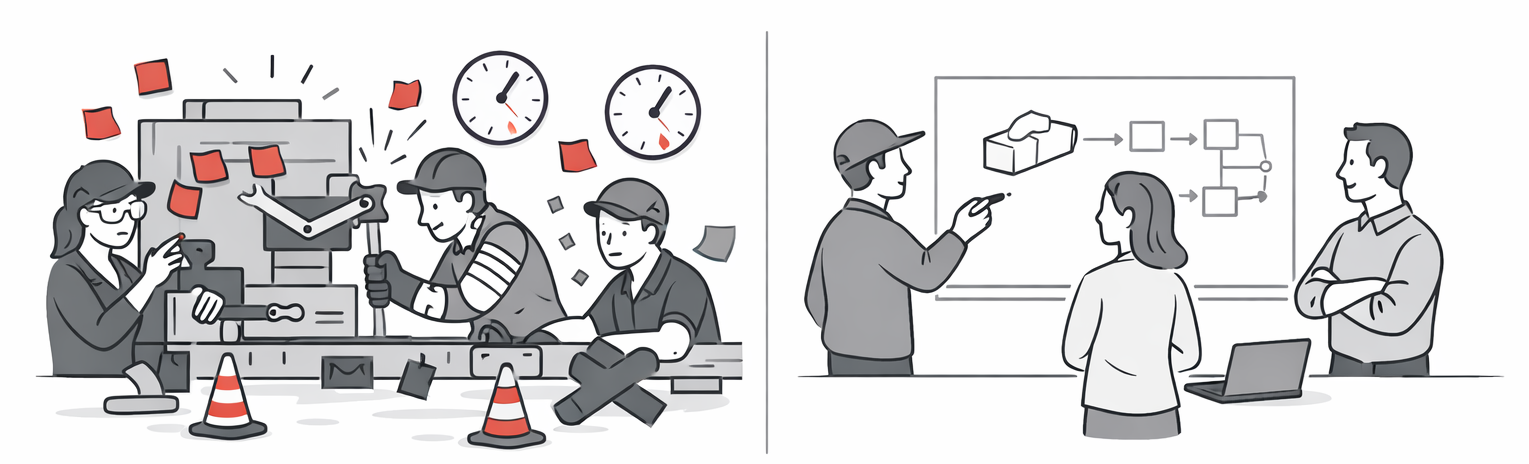
When you launch a new product or redesign a major process, most of the lifetime cost, quality, and safety performance is already built into the design and the way the process works. If manufacturing is brought in late, you usually discover problems only when the first units are being built: long assembly times, awkward ergonomics, fragile quality, or unstable flow.
The typical response is overtime, workarounds, and capital band-aids that treat symptoms but leave the underlying design untouched.
“Lean 3P exists to avoid that pattern. It gives you a structured way to design product and process together early enough that changes are still cheap.”
Instead of “discovering” manufacturability problems at launch, you look for them — and fix them — deliberately while the concept is still flexible. The question Lean 3P forces you to ask is simple: at what point in the project is it cheapest to change the design? The answer is always earlier than most organizations act.
Section 11.2
What Lean 3P Does Differently
Lean 3P changes how you think about industrialization in a few key ways. These are not incremental improvements to the traditional approach — they are genuine shifts in how teams work and when they work together.
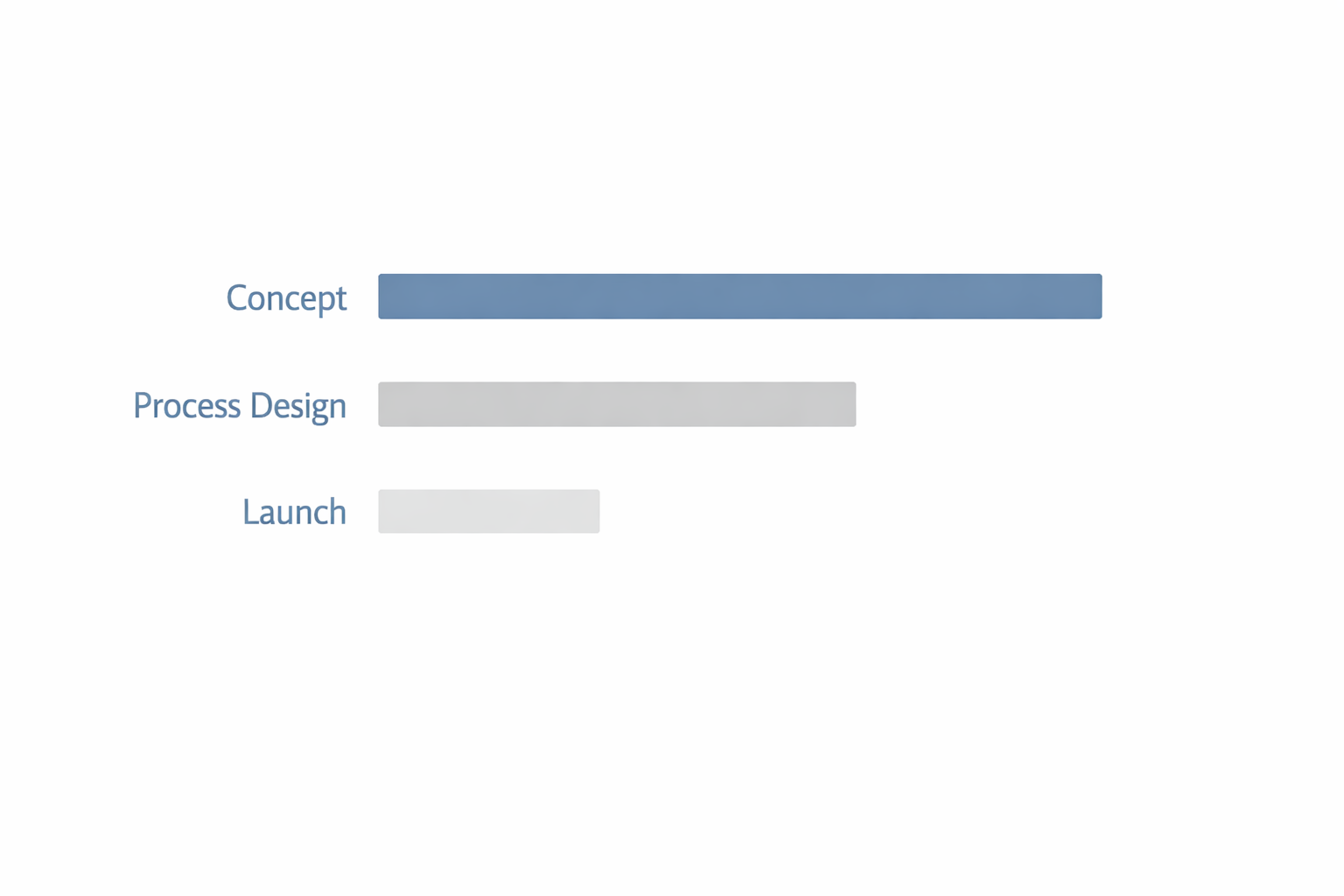
Done well, this approach leads to safer, more efficient, higher-quality processes that are ready to ramp faster and need less firefighting at launch and beyond.
Section 11.3
When You Should Use 3P (and When You Shouldn’t)
Lean 3P is a breakthrough method, not a tool for every small improvement. Choosing the right situations is important — using it where it fits creates step-change results; using it where it doesn’t wastes energy and creates cynicism about the method.
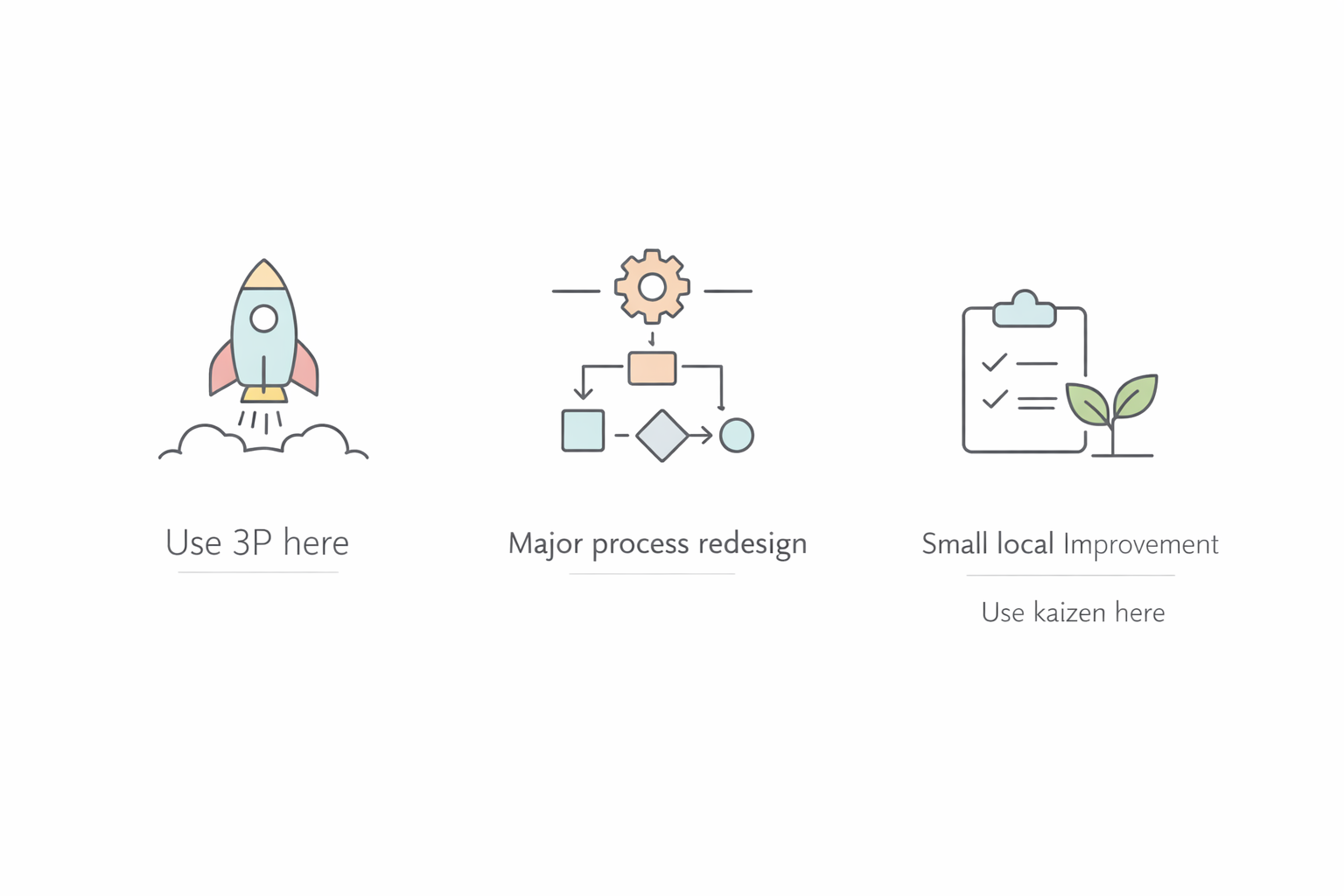
Use 3P when you are:
- Launching a significantly new product or platform.
- Acquiring a new product line and bringing it into your plant.
- Redesigning an existing process for radical cost, quality, or lead-time improvement.
- Facing major business pressure such as risk of plant closure or loss of a key customer.
- Building or reconfiguring a facility where layout and flow decisions will lock in cost for years.
Use kaizen instead when:
- The basic process is sound and you need incremental improvement.
- You are fine-tuning an existing line or solving local problems.
- You are driving small, frequent changes to an already stable system.
A simple rule of thumb: if you are designing from scratch or aiming for a step-change in cost and flow, use 3P. If you are improving what already exists, use kaizen on top of what 3P has created. The two methods are complementary, not competing.
Section 11.4
What Kind of Results to Expect
Organizations that apply Lean 3P seriously and consistently see real, measurable improvements. These results are not automatic — they come from treating 3P as a disciplined way of working, not just as a one-off workshop.
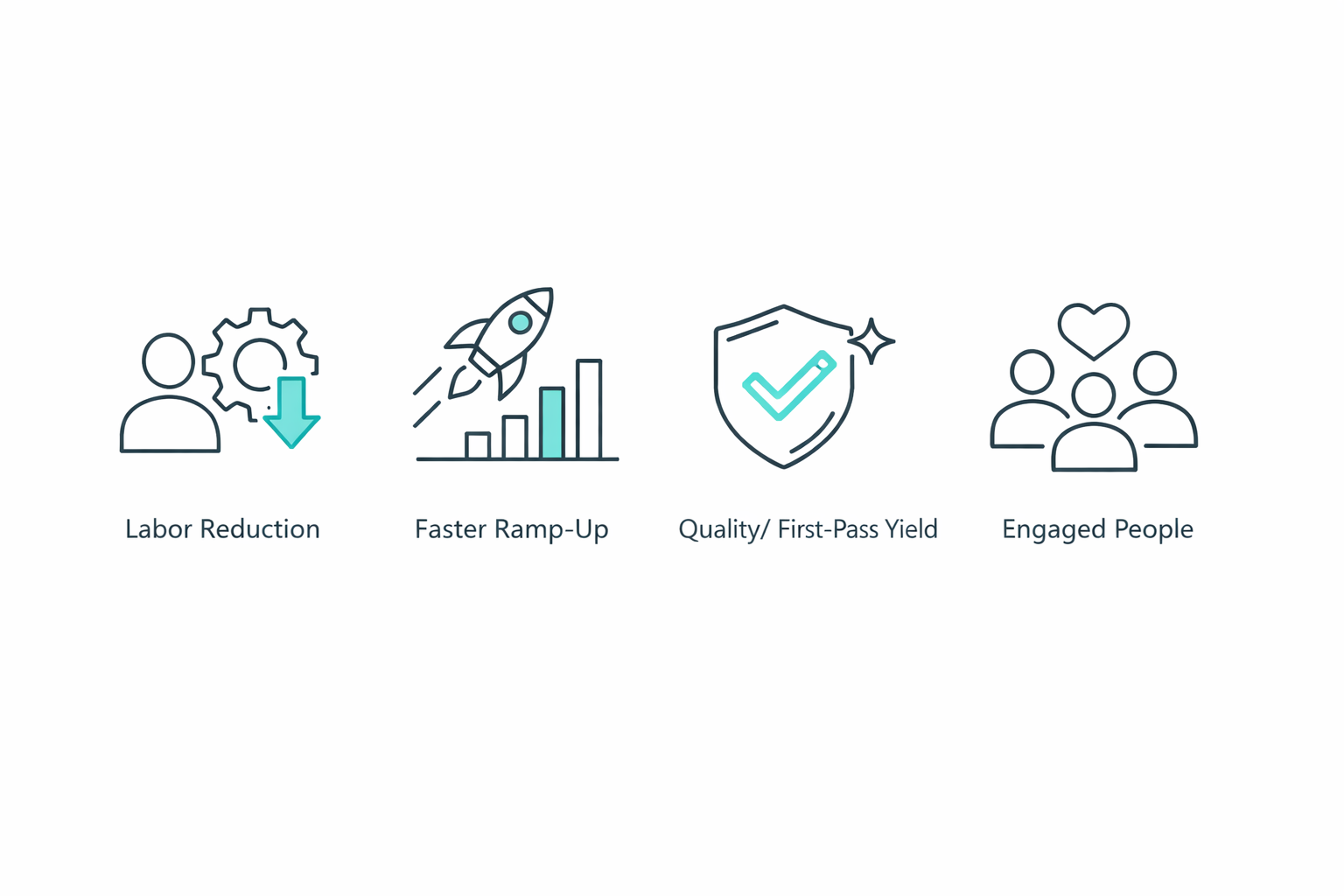
Labour Cost
40–60% reduction
On breakthrough process redesigns where product and process are designed together from early concept.
Ramp-Up Speed
Faster to stable production
Vertical start-up discipline means fewer surprises at launch and a shorter path to full-rate production.
Quality
Higher first-pass yield
Built-in quality and poka-yoke designed during 3P events reduces rework and scrap from the first shift.
People
More engaged operators
Operators who helped design their own work understand why it is set up the way it is — and improve it more readily.
Section 11.5
How to Use This Volume
This playbook is written for practitioners — engineers, manufacturing leaders, operators, and facilitators — who want concrete plays and tools to apply Lean 3P. You can use it in several ways depending on where you are in your industrialization work.
The next chapter explains how 3P thinks: set-based design, concurrent development, delaying decisions (but not learning), and the operator-as-surgeon mindset that underpins all the plays in Chapters 14–16.
Companion Articles & Plays